


 Cart
Cart
 sales@molnova.com


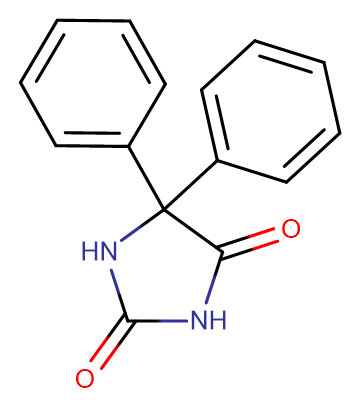
Phenytoin sodium
CAS No. 630-93-3
Phenytoin sodium( Phenytoin Sodium | Dilantin sodium | Diphenylhydantoin Sodium | 5,5-Diphenylhydantoin sodium salt | Diphantoine )
Catalog No. M15385 CAS No. 630-93-3
Phenytoin sodium is an inactive voltage-gated sodium channel stabilizer.
Purity : >98% (HPLC)
 COA
Datasheet
HNMR
HPLC
MSDS
Handing Instructions
COA
Datasheet
HNMR
HPLC
MSDS
Handing Instructions
| Size | Price / USD | Stock | Quantity |
| 500MG | 41 | In Stock |


|
| 1G | 48 | In Stock |
|
Biological Information
-
Product NamePhenytoin sodium
-
NoteResearch use only, not for human use.
-
Brief DescriptionPhenytoin sodium is an inactive voltage-gated sodium channel stabilizer.
-
DescriptionPhenytoin sodium is an inactive voltage-gated sodium channel stabilizer. (In Vitro):Phenytoin sodium is an antiepileptic drug. It is useful to treat partial seizures and generalized tonic-clonic seizures but not primary generalized seizures such as absence seizures or myoclonic seizures. Phenytoin is believed to protect against seizures by causing voltage-dependent block of voltage-gated sodium channels.Phenytoin has low affinity for resting sodium channels at hyperpolarized membrane potentials.When neurons are depolarized and the channels transition into the open and inactivated states, greater binding and block occur. The inhibitory potency is strongly use dependent, so that block accumulates with prolonged or repetitive activation, such as occurs during a seizure discharge. The blocking of sodium channels by phenytoin is of slow onset. The time course of fast sodium currents is therefore not altered in the presence of the drug and action potentials evoked by synaptic depolarizations of ordinary duration are not blocked. Thus phenytoin is able to selectively inhibit pathological hyperexcitability in epilepsy without unduly impairing ongoing activity. Phenytoin also blocks persistent sodium current and this may be of particular importance in seizure control. Phenytoin is a class 1b antiarrhythmic.
-
In VitroPhenytoin sodium is an antiepileptic drug. It is useful to treat partial seizures and generalized tonic-clonic seizures but not primary generalized seizures such as absence seizures or myoclonic seizures. Phenytoin is believed to protect against seizures by causing voltage-dependent block of voltage-gated sodium channels. Phenytoin has low affinity for resting sodium channels at hyperpolarized membrane potentials. When neurons are depolarized and the channels transition into the open and inactivated states, greater binding and block occur. The inhibitory potency is strongly use dependent, so that block accumulates with prolonged or repetitive activation, such as occurs during a seizure discharge. The blocking of sodium channels by phenytoin is of slow onset. The time course of fast sodium currents is therefore not altered in the presence of the drug and action potentials evoked by synaptic depolarizations of ordinary duration are not blocked. Thus phenytoin is able to selectively inhibit pathological hyperexcitability in epilepsy without unduly impairing ongoing activity. Phenytoin also blocks persistent sodium current and this may be of particular importance in seizure control. Phenytoin is a class 1b antiarrhythmic.
-
In Vivo——
-
SynonymsPhenytoin Sodium | Dilantin sodium | Diphenylhydantoin Sodium | 5,5-Diphenylhydantoin sodium salt | Diphantoine
-
PathwayMembrane Transporter/Ion Channel
-
TargetSodium Channel
-
RecptorSodium Channel
-
Research AreaNeurological Disease
-
Indication——
Chemical Information
-
CAS Number630-93-3
-
Formula Weight274.25
-
Molecular FormulaC15H11N2NaO2
-
Purity>98% (HPLC)
-
SolubilityEthanol: 11 mg/mL (40.1 mM); Water: 3 mg/mL (10.93 mM); DMSO: 32 mg/mL (116.68 mM)
-
SMILESO=C1NC(=O)C(N1)(C1=CC=CC=C1)C1=CC=CC=C1
-
Chemical Namesodium;5,5-diphenylimidazolidin-3-ide-2,4-dione
Shipping & Storage Information
-
Storage(-20℃)
-
ShippingWith Ice Pack
-
Stability≥ 2 years
Reference
1.Lenkowski PW, et al. Eur J Pharm Sci. 2004 Apr;21(5):635-44.
molnova catalog



related products
-
Tetracaine hydrochlo...
Tetracaine hydrochloride (Pontocaine) is a hydrochloride salt form of tetracaine which is a potent local anaesthetic and a channel function allosteric inhibitor.
-
Proparacaine hydroch...
An irreversible local anesthetic; inhibits pain sensations that is believed to act as an antagonist on voltage-gated sodium channels.
-
Anemoside B4
Anemoside B4 inhibits the secretion of IL-10.
